The world of work is being reshaped—not just by automation or remote collaboration, but by a more subtle revolution: how we learn. At the heart of this transformation is Generative AI, which is rapidly rewiring the learning DNA of professionals across industries.
Forget traditional page-turner modules, one-size-fits-all workshops, or passive webinars. Today’s professionals demand contextual, captivating, and personalised learning experiences.
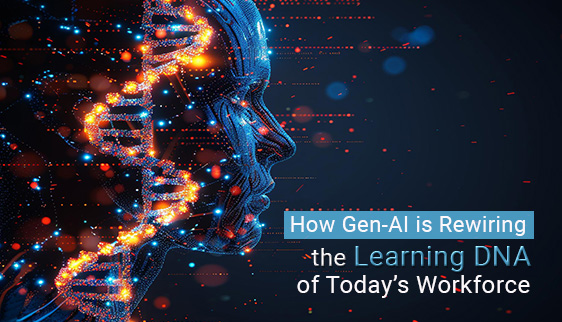
In the past, upskilling meant enrolling in a scheduled course or sitting through a fixed training path. But now, learning is:
- Conversational
- Immediate
- Situational
A supply chain manager no longer waits for a quarterly workshop on inventory optimisation—they quickly refer to Gen-AI tools or a crisis situation-linked module on model safety stock based on current disruptions. A legal professional checks the latest regulatory shifts in ESG disclosures while drafting a client memo. A designer generates 20 UX copy options with different tones in seconds.
This “learning in the flow of work” model, first championed by Josh Bersin, is now being supercharged by generative AI.
“AI tools have become our thought partners, embedded in every layer of workplace problem-solving.”
— Josh Bersin
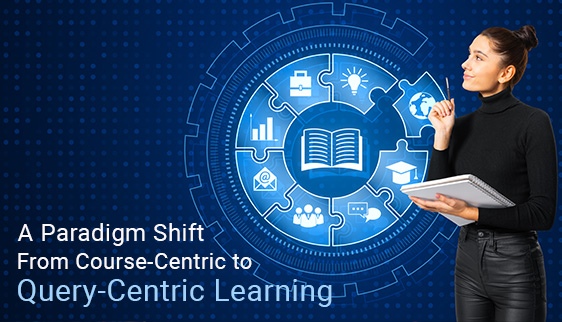
As the pace of technological change accelerates, working professionals across age groups are turning to AI to bridge knowledge gaps, acquire new skills, and accelerate decision-making—but how exactly is this transforming learning behaviour?
“AI is disrupting not only what people learn, but how they learn and apply that knowledge immediately.”
— Josh Bersin, Global HR Industry Analyst
Gen-Z and Millennials (20s–30s): They’re native to chat-based interfaces and adopt Gen-AI tools to explore, experiment, and iterate—using them for coding, copywriting, or even career advice.
Gen-X and Boomers (40s–60s+): While initially cautious, they’re increasingly leveraging Gen-AI for summarization, benchmarking, and strategic planning—reducing research time and boosting decision speed.
“In a multigenerational workforce, Gen-AI acts as a universal enabler—bridging digital fluency gaps and unlocking curiosity at every age.”
— Harvard Business Review, 2024
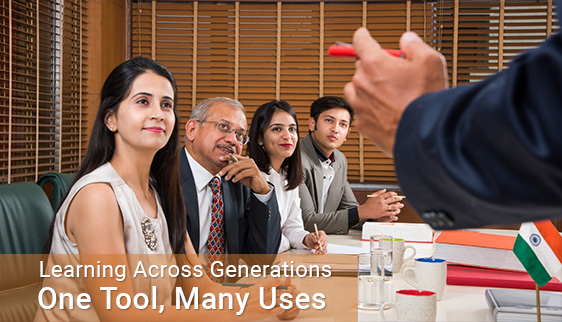
One of Gen-AI’s most powerful contributions to Learning & Development is the ability to create customised learning content at scale, and visually immersive.
Imagine this:
- A sales executive gets deal-specific pitch coaching, based on real CRM inputs and industry trends.
- A software engineer receives code review tips aligned with their team’s style guide and product architecture.
- A new manager is offered role-based leadership simulations, informed by organizational culture and past performance data.
Generative AI is enabling L&D teams to move from static content to dynamic learning journeys—tailored to job roles, skill levels, and even learning preferences.
“What Spotify did for music curation, Gen-AI is doing for workplace learning.”
— Ethan Mollick, Wharton School
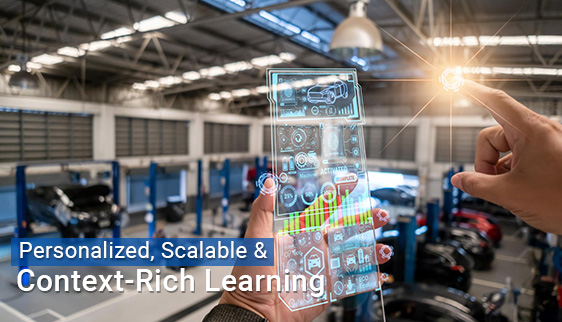
Despite the promise, several challenges must be addressed:
- Information Validity & Bias: Gen-AI may hallucinate or reinforce biases. Professionals must learn AI literacy—to question, verify, and contextualize outputs.
- Over-Reliance on AI: Passive dependence on Gen-AI can erode deep thinking. The goal should be augmentation, not automation, of critical judgment.
- Generic Content Fatigue: Without customization, AI-generated content can feel impersonal and irrelevant—leading to disengagement.
- Data Privacy & IP Concerns: Using Gen-AI with sensitive data can raise security risks, especially in regulated industries.
“In the age of AI, the most important skill will be the ability to continuously learn—and unlearn.”
— Satya Nadella, CEO of Microsoft
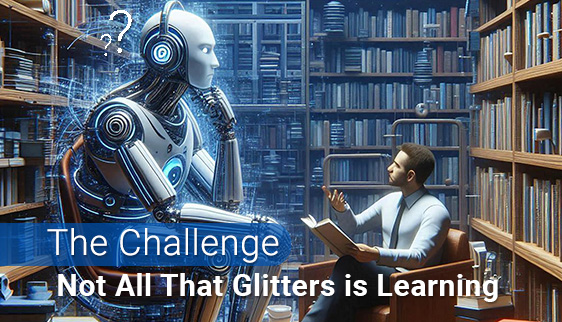
To unlock the full potential, organisations must rethink their learning architecture:
- Context-Aware Engines — Train AI models on internal playbooks, past projects, and domain-specific knowledge to generate organisation-relevant learning content.
- Role-Based Learning Paths — Design dynamic microlearning tracks based on skills gaps, performance reviews, and career goals.
- AI + Human Curation — Blend generative outputs with expert validation to maintain accuracy, relevance, and trust.
- Interactive Simulations — Utilise AI to create scenario-based role-plays and decision trees for immersive upskilling, particularly in leadership, negotiation, and crisis management.
“The future of learning is not about replacing trainers with bots. It’s about empowering every learner with a personalized coach, content creator, and collaborator—in one Gen-AI interface.”
— McKinsey, 2023
[ IMAGE 6 — placeholder: image not yet uploaded ]
We’re at the cusp of a seismic shift. As Gen-AI becomes embedded in our workflows, the very neural pathways of how professionals learn, retain, and apply knowledge are being rewritten.
From micro-mastery of skills to macro-strategy execution, Gen-AI is enabling a new kind of professional—faster, more adaptable, and endlessly curious.
It’s time for L&D leaders to start thinking about hyper-personalised content libraries and start designing adaptive, AI-powered learning ecosystems. Think of a “Netflix of Learning” where content is dynamically suggested and sequenced, much like a DNA of learning.
Source: How Gen-AI is Rewiring the Learning DNA of Today’s Workforce — Santosh Ranjan (LinkedIn)